Why Are ‘Ghosts’ Considered Evil?
Why are ‘Ghosts’ considered evil? By Psychic Medium Kristian von Sponneck
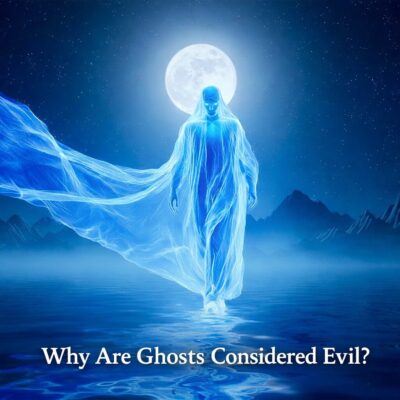
Introduction: I Do Not Like Using the Word Ghost
The idea that ghosts are evil is so deeply ingrained in modern culture that many people never question it. Mention the word “ghost” and the immediate associations are fear, danger, malevolence, and threat. From horror films to television shows, books, and social media clips, ghosts are almost always portrayed as something to be afraid of. As a working psychic medium, this is one of the biggest misconceptions I encounter, and it is one I actively challenge.
In truth, I do not like using the word “ghost” at all. It is a loaded term, shaped far more by entertainment than by genuine experience. It carries assumptions that are rarely accurate and often harmful. When people believe ghosts are inherently evil, they approach spiritual awareness with fear rather than understanding. That fear, in itself, becomes part of the problem.
Where the Idea of Evil Ghosts Comes From
The belief that ghosts are evil is largely cultural rather than experiential. Films, television, and storytelling thrive on fear. A calm, neutral, or compassionate spirit does not make compelling horror. As a result, the narrative has been shaped almost entirely around threat and danger.
Over time, these portrayals stop being seen as fiction and start influencing belief. People begin to assume that any unseen presence must be hostile, watching, or intent on harm. This conditioning is powerful. Even those who claim not to believe in ghosts often react emotionally when faced with the idea of one.
The reality is that fear sells, and fear sticks.
Why I Avoid the Word “Ghost”
I avoid the word “ghost” because it collapses too many different experiences into a single, misleading label. It suggests something unnatural, stuck, or dangerous by default. In my work, what people call ghosts are better understood as states of awareness, not monsters.
Awareness does not become evil simply because it no longer has a physical body. Just as in life, intention matters. Some awareness is calm, some confused, some unresolved, and some compassionate. Reducing all of that complexity to the word “ghost” strips away nuance and replaces it with fear.
Language shapes expectation, and expectation shapes experience.
Intention Shapes Experience
One of the most important principles I work with is that intention matters. The general atmosphere someone brings into an experience often determines what they encounter.
Good intentions tend to invite well-intentioned awareness. Calm curiosity, respect, and grounding create an environment where experiences feel neutral or supportive. Fear, aggression, provocation, and obsession tend to attract awareness that mirrors those qualities.
This does not mean someone “deserves” a negative experience. It means awareness responds to emotional and psychological states. Just as people in life respond differently depending on how they are approached, so too does awareness beyond physical form.

Why Fear Creates the Sense of Evil
Fear is not just an emotion; it is a filter. When people are afraid, everything they experience is interpreted through threat. Normal sounds become danger. Subtle sensations become attack. Ambiguity becomes certainty.
Many experiences labelled as evil hauntings are fear-driven interpretations rather than external threats. Once fear takes hold, the mind fills in gaps rapidly. This is not imagination in a dismissive sense; it is a survival mechanism misapplied.
From a mediumship perspective, fear distorts perception far more than awareness itself.
The Influence of Horror Films and Media
Horror films have done more to shape beliefs about ghosts than any spiritual tradition ever has. The imagery is vivid, repetitive, and emotionally charged. Children grow up absorbing these ideas long before they can critically examine them.
The result is a cultural expectation that unseen equals unsafe. Even those who intellectually reject ghost stories often carry emotional residue from years of exposure to frightening imagery.
This conditioning explains why people often report fear before experience. They expect something bad, so everything is interpreted that way.
Are There Well-Intentioned and Poorly Intentioned Spirits?
Yes, just as there are well-intentioned and poorly intentioned people. Awareness does not automatically become enlightened or benevolent after death. Emotional patterns, beliefs, and unresolved states can persist for a time.
However, poorly intentioned awareness is far rarer than people assume. Most experiences described as negative are confused rather than malicious. Confusion can feel unsettling, but it is not the same as evil.
True malevolence is uncommon. Confusion, fear, and misinterpretation are far more prevalent.
The In-Between and Misunderstanding
Many experiences people call hauntings fall into what might be described as an in-between state. Awareness has not fully shifted, but it is not actively harmful. These experiences are often passive rather than interactive.
When people approach these experiences with fear, they escalate emotionally. When approached calmly, they often lose intensity or meaning altogether.
The label of “evil ghost” often says more about the observer’s state of mind than the experience itself.
Ouija Boards and Why They Add to the Problem
Ouija boards deserve specific mention because they are one of the most common ways people attempt to interact with what they believe are ghosts. They are often treated as toys, party games, or harmless curiosity.
From my perspective, ouija boards are problematic not because they are inherently evil, but because they encourage indiscriminate contact. They invite anything to respond, without understanding intention, awareness, or boundaries.
When people use ouija boards with fear, excitement, or provocation, they create a chaotic emotional environment. This does not attract wisdom or clarity. It attracts reaction.
If someone then has an unsettling experience, it reinforces the belief that ghosts are evil, when in reality the method was irresponsible.
Bad Intentions Invite Poor Outcomes
This is a difficult but necessary truth. When people approach spiritual awareness with bad intentions, such as seeking fear, power, control, or proof through challenge, the experiences that follow are often unpleasant.
This does not mean something external attacked them. It means they created an environment where discomfort was likely. Emotional states influence perception profoundly.
Well-intentioned engagement is grounded, patient, and respectful. Poorly intentioned engagement is rushed, provocative, and careless.
Why Neutral Experiences Are Ignored
Interestingly, most neutral or positive experiences never get labelled as ghost encounters. People dismiss them as coincidence or imagination. Only frightening experiences get attention, retelling, and amplification.
This skews perception. People hear endless stories of evil ghosts and very few stories of quiet, neutral awareness. Over time, this imbalance becomes belief.
Fear is louder than neutrality.
The Psychological Layer Cannot Be Ignored
It is also essential to acknowledge psychology. Anxiety, stress, grief, sleep deprivation, and suggestion all influence perception. None of these mean someone is weak or imagining things. They mean the human mind is complex.
Psychological explanations do not invalidate spiritual ones. They often overlap. Fear-based interpretation sits at the intersection of both.
Understanding this removes the need to label experiences as evil.
Why Evil Is a Human Concept
Evil is a moral judgement rooted in human behaviour and intention. Applying it automatically to unseen awareness oversimplifies something deeply complex.
Awareness beyond physical life does not operate according to horror film logic. It is not lurking to scare or harm. When experiences feel negative, it is usually because something unresolved is being encountered, either internally or externally.
Evil is a convenient label for fear we do not understand.
Reframing the Question Entirely
A more useful question is not why ghosts are considered evil, but why fear dominates the conversation. When fear is removed, experiences often change dramatically.
Understanding replaces terror. Grounding replaces obsession. Calm replaces escalation.
From my perspective, most people do not need protection from ghosts. They need protection from fear-based narratives.
Conclusion: Ghosts Are Not Something to be Afraid Of
Ghosts are considered evil largely because culture has taught us to see them that way. Films, stories, and careless methods of engagement have created a narrative that equates unseen awareness with danger. This narrative is powerful, but it is not accurate.
I avoid the word “ghost” because it carries fear rather than understanding. What people experience are forms of awareness shaped by intention, emotion, and interpretation. Good intentions tend to bring well-intentioned experiences. Fear and provocation tend to bring discomfort.
Ouija boards, horror media, and sensationalism have reinforced the idea of evil where confusion or misunderstanding would be more accurate.
From my perspective as a psychic medium, awareness is not inherently good or evil. It responds. When we approach it with respect, grounding, and responsibility, fear loses its grip. And when fear dissolves, so too does the idea that ghosts are something to be afraid of at all.
You may like my last post, click the following to read Ghost hunting: The hidden dangers


 used interchangeably, yet they carry very different meanings, emotions, and historical roots. Understanding the difference between them can change how we think about what happens when we die—and what it really means when we sense something beyond ourselves.