Why Aren’t People Flocking to Spiritualist Churches in The UK — Even Though Mediums Can Connect with Loved Ones?
Why aren’t people flocking to Spiritualist Churches in the UK by Psychic Medium Kristian von Sponneck
It should be the most obvious thing in the world. If there are places in the UK where people can go — for free or for a small donation — to hear from loved ones who have crossed over, surely those buildings should be overflowing. People should be queueing down the street. The seats should be full. The energy should be alive.
But they aren’t, not anymore, and pretending otherwise is part of the problem.
Spiritualist churches across the UK are struggling. Some are barely surviving. Some are closing quietly. And some exist only because a handful of loyal volunteers refuse to let the doors shut. The question is always the same:
“If mediumship is real, why aren’t people flocking to these churches?”
The answer is uncomfortable — but it needs to be said.
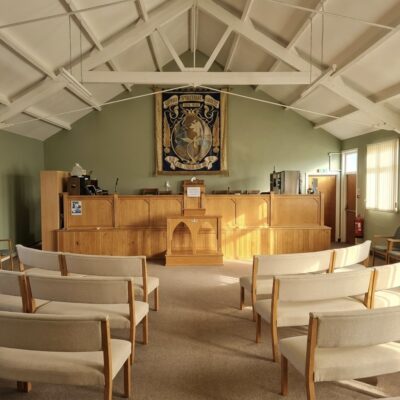
The UK Has a Major Awareness Problem
Mediumship is mainstream in the United States. People can name TV mediums off the top of their heads: Tyler Henry, Theresa Caputo, Matt Fraser, John Edward, Thomas John and many others. Mediumship is visible, normalised, discussed, and part of everyday culture.
In the UK?
There is nothing.
No major series.
No current mainstream names.
No presence in modern media.
Not even a single programme that puts mediumship in front of the next generation.
Most people in Britain have no idea what Spiritualist churches even do. They don’t know:
that demonstrations happen
that it’s open to the public
that it’s affordable
that mediums offer evidence of survival
that it’s not a cult or religion in the traditional sense
that the focus is healing, connection and understanding
Awareness is at rock bottom. And when people don’t know something exists, they don’t walk through the door.

The Perceived Image Is Hurting the Movement
Let’s be honest: Spiritualist churches have an image problem. A big one.
The word “church” itself sends younger people running in the other direction. It carries a heaviness, a formality, and — to many — a sense of outdated ritual. Add in the hymns, the old formats, the lack of modern communication, lack of modern music, and the slightly inward-facing culture, and it becomes clear why the public feels disconnected.
People fear they are stepping into a closed group or cult-like environment. Not because churches actually are cults — they aren’t — but because they look and feel that way from the outside. The branding is wrong. The atmosphere is dated. The connection to modern life is missing.
Mediumship itself is powerful, but the packaging in the UK is decades behind.
The SNU’s Grip on UK Churches Keeps Everything Stuck
This is the part nobody wants to talk about, but it must be addressed.
The Spiritualists’ National Union (SNU) has a fixed, traditional hold over every affiliated Spiritualist church in the UK. And while the SNU has done a great deal historically, its structure is restrictive, slow to adapt, and firmly rooted in the past. Younger mediums don’t relate to it. Younger audiences certainly don’t. And many churches feel they cannot evolve because the SNU demands they follow an old, rigid model that doesn’t work in the modern world.
Mediumship has moved forward.
The world has moved forward.
The SNU has not.
Churches want to grow, modernise, rebrand, try new formats, create fresh experiences — but if they’re SNU-affiliated, they’re tied to rules, expectations and doctrines from a completely different era.
When an entire movement is controlled by an organisation that doesn’t reflect the current world, decline becomes inevitable.
The Format Is Outdated — And People Can Feel It
Younger people expect: modern presentation, clear sound, engaging speakers, relatable mediums, safe, warm, current environments, accessible teaching, welcoming energy, and up-to-date communication styles.
Instead, many churches offer: dim lighting, cold halls, old hymn books, the exact same structure from 40 years ago, rigid order of service, no online presence, no marketing, no contemporary language, and no sense of momentum.
People aren’t rejecting mediumship — they’re rejecting outdated delivery.
COVID Was the Final Blow
Churches were already weakening before COVID, but the pandemic accelerated everything.
People stopped attending.
Volunteers burned out.
Elder audiences didn’t return.
Younger audiences didn’t even know the churches existed.
Some churches closed permanently.
Others reopened to half-empty rooms.
The belief that attendance would “bounce back” was wishful thinking. Without visibility, modern relevance, or structural change, there is nothing to bounce back to.
Mediumship Itself Is Not the Problem — The Presentation Is
People want connection.
People want meaning.
People want to hear from their loved ones.
People want reassurance that life continues.
But they aren’t going to walk into buildings that look forgotten by time.
They aren’t going to engage with organisations that refuse to evolve.
They aren’t going to join movements that don’t speak their language.
UK mediumship is not failing because mediumship doesn’t work.
It’s failing because mediumship isn’t being shown.
Change Must Happen — Or There Will Be Nothing Left
Spiritualist churches will not survive the next decade unless: they modernise their image, they break free from restrictive structures, they update their services, they use modern technology, they embrace new mediums, they engage younger demographics, they create contemporary content, they stop operating like it’s 1975, they step into mainstream spaces, and they stop depending solely on the SNU.
It’s not optional.
It’s essential.
Mediumship has the power to heal, comfort and transform lives.
The demand for spiritual connection has never been higher.
But if the movement refuses to evolve, the doors will continue to close.
Final Word: Mediumship Deserves Better — And the Public Deserves Access
People aren’t flocking to Spiritualist churches because they don’t know they exist, they don’t understand what happens inside, and they cannot relate to the outdated structures that hold everything back.
Mediumship itself is alive.
The Spirit world is alive.
But the UK’s presentation of mediumship is not.
If we want survival — real survival — change can’t be delayed any longer. The future of mediumship in this country depends on it.
You may like my last post, click the following to read Why mediumship appeals to younger audiences in the US — and why the UK is falling behind