Derek Acorah: A Deeper Look at the Medium, the Man, the Controversies — And Why I Still Hold Him in High Regard
Derek Acorah: a deeper look at the medium, the man, the controversies — and why I still hold him in high regard by Psychic Medium Kristian von Sponneck
I’ve written about Derek Acorah before, but I want to go much further this time. The name Derek Acorah sits at the crossroads of admiration and controversy in a way few mediums ever experience. He was loved with passion, criticised with intensity, misunderstood by many, yet eternally remembered by almost everyone who ever saw him work. For someone to have such an impact — good or bad — they must have been doing something remarkable.
And Derek was remarkable.
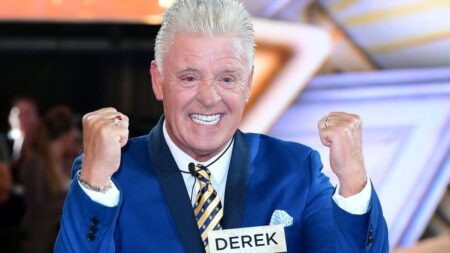
He was one of the most recognisable mediums the UK has ever produced, a genuine household name, and arguably the only medium who achieved mainstream entertainment status on national television. Whether you adored him or questioned him, Derek Acorah was unforgettable. His presence changed the way the public viewed mediumship, for better or worse — but always dramatically, always passionately, always powerfully.
Today I want to explore him properly, not just as a viewer might, but as a fellow working psychic medium who understands the pressures, expectations, complexities and vulnerabilities of the platform.
Derek Acorah Was a Born Entertainer — And That Is NOT an Insult
People underestimate just how important “entertainment” is in mediumship. Before evidence can land, before Spirit can communicate, before the reading can unfold, a medium must do one crucial thing:
Hold the audience.
Most mediums struggle with this. Derek never did.
He had absolute command of a room. His stage presence was palpable. His confidence was theatrical, magnetic and infectious. He could raise the entire energy of a theatre within seconds. Whether people believed in mediumship or not, they believed in Derek Acorah the performer.
And here’s the truth most mediums won’t admit:
Mediumship needs showmanship.
Not fakery.
Not theatrics for the sake of it.
But presence.
Derek had presence in a way that cannot be taught.
Thousands who saw him live said his readings were incredibly accurate, heartfelt and personal. People walked away with closure, comfort and clarity. And those personal experiences — the ones that never make headlines — tell a different story than the controversies.

The Controversial Moments That Defined Him — But Should Never Define His Entire Career
Let’s address them directly, because avoiding them would be dishonest and disrespectful to both Derek and the reader.
The “Mary Loves Dick” Moment (Most Haunted)
This clip exploded online. It became a meme, a running joke, a viral snippet replayed far outside its original context. But what people never consider is how much editing, framing, producer expectations and narrative-driven television shape these moments.
Derek’s energy, personality and channelling style made him a perfect target for out-of-context humour. But a five-second clip cannot erase decades of genuine work, thousands of sincere readings and countless people who benefited from his mediumship.
The Creed Kafer Incident
The infamous setup by the Most Haunted team — feeding Derek the fictional spirit name “Creed Kafer” (an anagram of Derek Faker) — is probably the most quoted criticism he ever faced.
But let’s put that into perspective.
Derek was working under: immense pressure, tight filming schedules, producers hungry for content, the expectations of millions of viewers, and a format where “nothing happening” was simply not allowed.
Most Haunted was an entertainment show, not an experimental laboratory. Derek was a performer being pushed to deliver under unnatural circumstances. Anyone who thinks they would fare perfectly in the same environment — with cameras in their face, crew expecting drama and a manufactured storyline — is naïve.
One manipulated moment does not define an entire profession or an entire lifetime of work.
The Driving Force Behind Derek — His Wife, Gwen
People underestimate the role Gwen Acorah played. She wasn’t just Derek’s wife; she was his manager, organiser and emotional foundation. She kept the machine running, protected him from overwhelming schedules, handled the practical side of touring, dealt with logistics, bookings and public relations, and stood by him through every controversy.
Behind every medium is a private life the public never sees.
Gwen anchored Derek’s.
And that stability allowed him to flourish on stage.
Without her, Derek’s career might never have reached the scale it did.
The Michael Jackson Séance — A Defining Moment of TV Mediumship
When Sky TV scheduled a highly publicised séance for Michael Jackson, Derek stepped into a spotlight most mediums would never dare to face. It was bold, bizarre, controversial and unbelievably high pressure. Critics ripped into it before it even aired.
But Derek delivered it with the same passionate energy he gave all of his work. Whether people liked the concept or not, he handled a near-impossible situation with professionalism. It wasn’t just a séance — it was a testament to Derek’s fearlessness as a medium and performer.
He stepped into every arena without hesitation.
That alone deserves respect.
Derek Off-Screen: The Version Most People Never Saw
Here’s the part the media NEVER talks about.
People who met Derek one-to-one tell a completely different story compared to the headlines. They describe him as: warm, caring, down-to-earth, genuinely present, emotionally intuitive, surprisingly gentle, deeply respectful, and committed to his sitters.
This is the Derek mediumship insiders know.
This is the Derek his audiences adored.
This is the Derek whose private readings changed lives.
Most mediums would be proud to be remembered this way — controversies or not.
From One Medium to Another: My Honest View of Derek Acorah
As a working psychic medium, I see Derek clearly — not as a meme, not as a scandal, not as a media character, but as a fellow professional who carried the weight of national fame on his shoulders.
Here is my truth:
Derek Acorah modernised the public’s view of mediumship.
He brought mediumship into millions of living rooms.
He made the subject accessible.
He made it exciting.
He made it entertaining.
He made it something people talked about.
He wasn’t perfect — none of us are.
He wasn’t without criticism — no public figure is.
But he was pioneering, influential, larger than life, and impossible to replace.
Few mediums today will ever come close to the visibility, reach and impact Derek achieved.
The Legacy Derek Acorah Leaves Behind
People still talk about him.
People still defend him.
People still enjoy his old shows.
People still say, “I saw Derek once and he was incredible.”
That is legacy.
That is impact.
That is what survives after controversy fades.
Derek Acorah wasn’t just a medium — he was a phenomenon.
And despite everything thrown at him, he continues to be remembered with love, loyalty and respect from those who experienced his work first-hand.
From one medium to another, with honesty and admiration:
Derek, thank you for the energy you brought to this world — and the world beyond.
You may like my last post, click the following to read Research Mediums: A Deeper Dive Into the Problem Nobody in Modern Mediumship Wants to Confront
Derek Acorah: A Deeper Look at the Medium
 Derek Acorah and the now-legendary “Kreed Kafer” possession.